
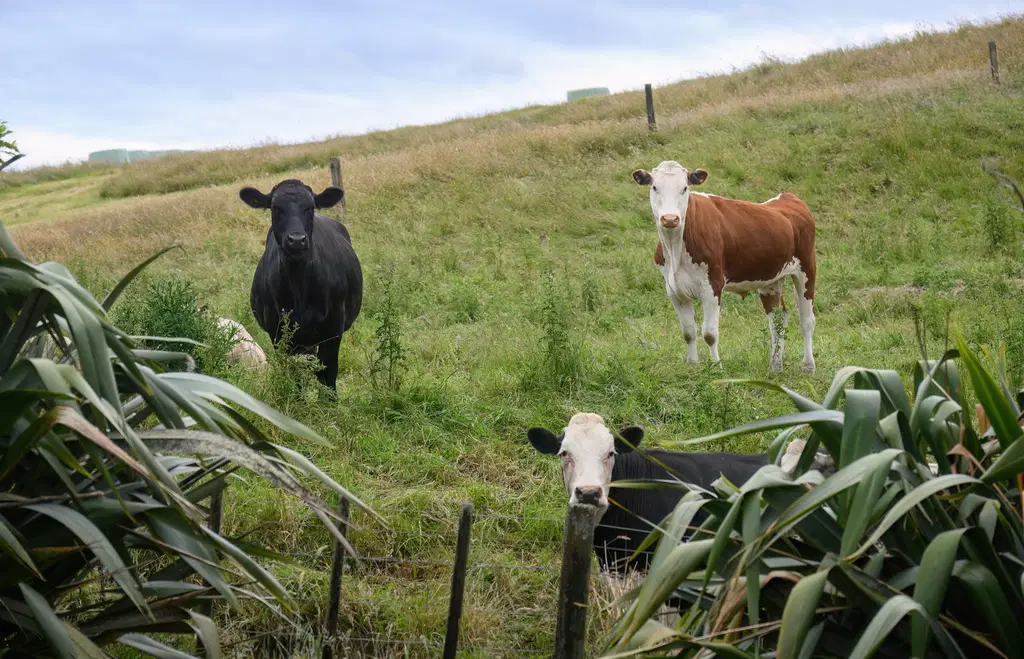
Read the flight zone: smarter cattle handling in the yards
Every farmer has watched a quiet mob turn into chaos in the yards, and most have the bruises or broken rails to prove it.
Handling is a skill that directly affects injury rates, animal health and how much harder the next muster will be.
The principles behind low-stress handling are rooted in how cattle perceive the world, and working with that perception rather than against it is what separates a smooth yarding from a dangerous one.
How cattle perceive the yards
Cattle are prey animals and their senses are built for detecting threats.
They have near-panoramic vision - roughly 330 degrees - but poor depth perception and a blind spot directly behind them.
That combination explains a lot of yard behaviour: they baulk at shadows, contrasts and changes in flooring because they genuinely can’t judge what they’re looking at, and they startle when something approaches the blind spot they can’t monitor.
They also hear higher frequencies than we do, so shouting and clanging gates are more aversive to them than to us.
Flight zone and point of balance
Two concepts do most of the work in practical handling:
- Flight zone is the animal’s personal space. Step across its edge and the animal moves away; step back out and it settles. The zone shrinks with familiarity. Well-handled stock may let you almost touch them, while rarely-yarded cattle react from many metres away. Pushing deep into the flight zone can trigger the panic, turning and barging that cause injury.
- Point of balance sits at the shoulder. Move behind it and the animal steps forward; move ahead of it and it slows or backs up. Skilled handlers work the edge of the flight zone in a zig-zag behind the point of balance, applying and releasing pressure to keep stock moving steadily without force.
The release of pressure is the part most people miss. Cattle learn from the moment the pressure stops, so stepping back the instant an animal moves correctly teaches it far faster than constant pushing.
Yard design that does half the work
A well-designed yard reduces the handling skill required and the injuries that follow:
- Curved races suit cattle’s instinct to circle back toward where they came from, and stop them seeing the crush or truck until they’re committed to moving forward.
- Solid-sided races and forcing pens remove the outside distractions (people, dogs, movement) that cause baulking.
- Non-slip flooring is critical. A slip in the race or on a ramp can cause soft-tissue injury or a fall that takes weeks to come right, and cattle remember the spot, baulking there at every future yarding.
- Even lighting prevents the dark-to-light and light-to-dark transitions cattle refuse to walk into. Cattle move willingly toward diffuse light but resist stepping into shadow or glare.
Habits that keep stock and people safe
Fill a forcing pen only two-thirds full. Cattle need room to turn toward the race, and a packed pen causes piling and bruising.
- Work in smaller draughts rather than forcing the whole mob at once.
- Keep dogs off the flight zone in confined spaces, where a barking dog has nowhere to send the animal but over a rail or person.
- Reserve electric prodders for genuine last resort; overuse raises cortisol, undermines future handling and is increasingly scrutinised under welfare standards.
- Walk the yards regularly for protruding bolts, splintered rails and gaps a leg or head can catch in.
When handling problems are really health problems
Persistent baulking, a normally quiet animal suddenly turning flighty or repeated injuries at one point in the yard are always worth investigating.
Lameness is a frequent and easily missed driver. A cow reluctant to load or stand in the crush may be in genuine pain rather than being difficult.
Stress itself carries a measurable cost: elevated cortisol suppresses immune function and has well-documented effects on conception rates, weight gain and milk yield, so rough handling shows up later in production figures.
If a behaviour change is sudden or injuries are mounting, it’s worth a conversation with your vet before assuming the animal is simply stubborn.