
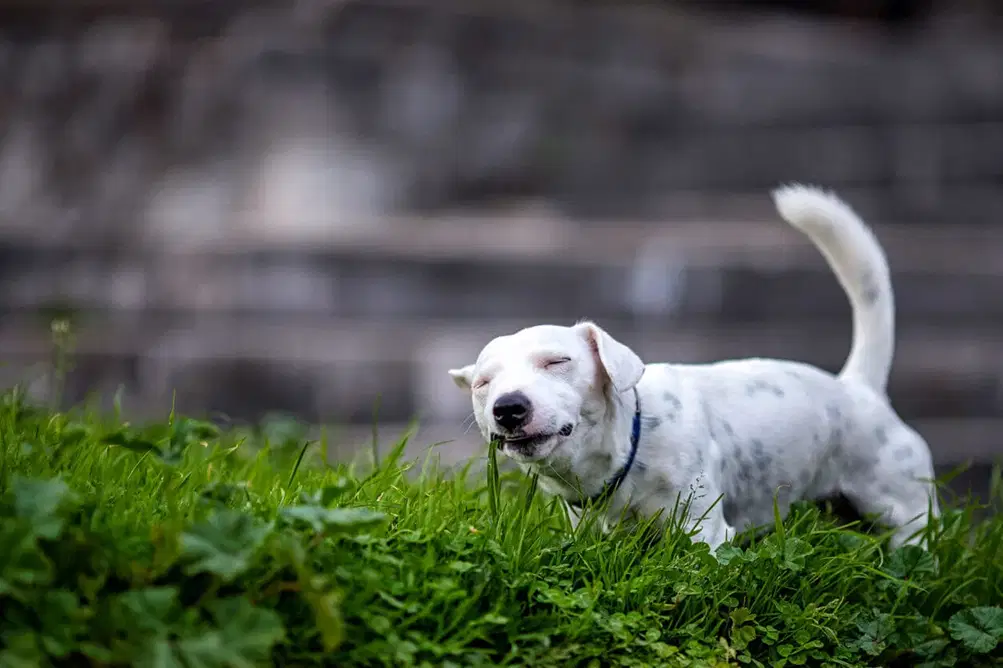
Is your dog eating grass? Here's when to worry
We’ve all seen it. Your dog stops mid-walk, sniffs the ground, and suddenly starts munching on a patch of grass like it’s the most delicious thing in the world. And the truth is, grass-eating is quite common in dogs. But is it harmless, or should you be worried?
Why dogs eat grass
Munching on grass is one of dogs’ quirks. And in most cases, it’s nothing to worry about. Here’s why they might be doing it:
- Natural instinct Your dog’s love for grass might stem from their wild ancestors. Ancient canines consumed plant material alongside prey, so this behaviour could be a leftover instinct.
- Dietary needs Sometimes, dogs snack on grass to fill a gap in their diet. Grass contains fibre, which helps with digestion, and your pup might be instinctively seeking out what their body needs.
- Boredom or anxiety If your dog spends a lot of time alone or lacks mental stimulation, chewing grass could be their way of passing the time. It’s like their version of stress-eating—but greener!
- Tummy trouble In some cases, dogs turn to grass when they’re feeling queasy. It might help them vomit and ease an upset stomach, though not all grass-eaters throw up.
When should you be concerned?
While occasional grass-eating is usually harmless, it’s important to watch for signs that something might be wrong:
- Frequent vomiting If your dog regularly vomits after eating grass, it could be a sign of gastrointestinal problems that need attention.
- Lethargy A dog that’s unusually tired or seems out of sorts might have more than just a craving for greenery.
- Changes in appetite or weight Skipping meals or losing weight without explanation is always a reason to consult your vet.
- Diarrhoea or bloody stool These symptoms can point to serious digestive issues, so don’t ignore them.
How to keep your grass-loving pup safe
If your dog enjoys a grassy snack now and then, there’s no need to panic. Just take a few simple precautions to keep them safe:
- Avoid treated grass Pesticides, herbicides, and other chemicals can be toxic to dogs. Make sure the grass your pup nibbles on is free from harmful treatments.
- Provide a balanced diet A well-rounded diet can reduce their need to seek out extra fibre. Talk to your vet if you’re unsure whether your dog’s current food is meeting their nutritional needs.
- Keep them engaged Bored dogs are more likely to find trouble—or a patch of grass to snack on. Regular walks, interactive toys, and plenty of playtime can help keep them happy and distracted.
When to call the vet
If your dog’s grass-eating becomes excessive or comes with other symptoms like vomiting, diarrhoea, or loss of appetite, it’s time to get professional advice. A quick check-up can rule out any serious issues and give you peace of mind.
Like to learn more? Contact us today for tailored recommendations and expert guidance.